



Marketing Case Study
Summary
Labubu's journey from a quirky collectible toy to a global phenomenon reveals the power of smart marketing, consumer psychology, and cultural influence. Through blind-box marketing, celebrity exposure, social media virality, and scarcity-driven demand, POP MART transformed Labubu into a highly desirable collectible and fashion accessory. The Monsters franchise generated RMB 14.16 billion in revenue in 2025.
Yet Labubu's story goes beyond viral hype. It shows how distinctive branding, emotional connections, user-generated content, and effective sales strategies can accelerate growth, while its changing 2026 sales momentum highlights the importance of innovation and customer retention.
What if the next billion-dollar business opportunity didn't come from a revolutionary technology, luxury fashion house, or groundbreaking innovation, but from a small, mischievous-looking monster with sharp teeth and oversized ears?
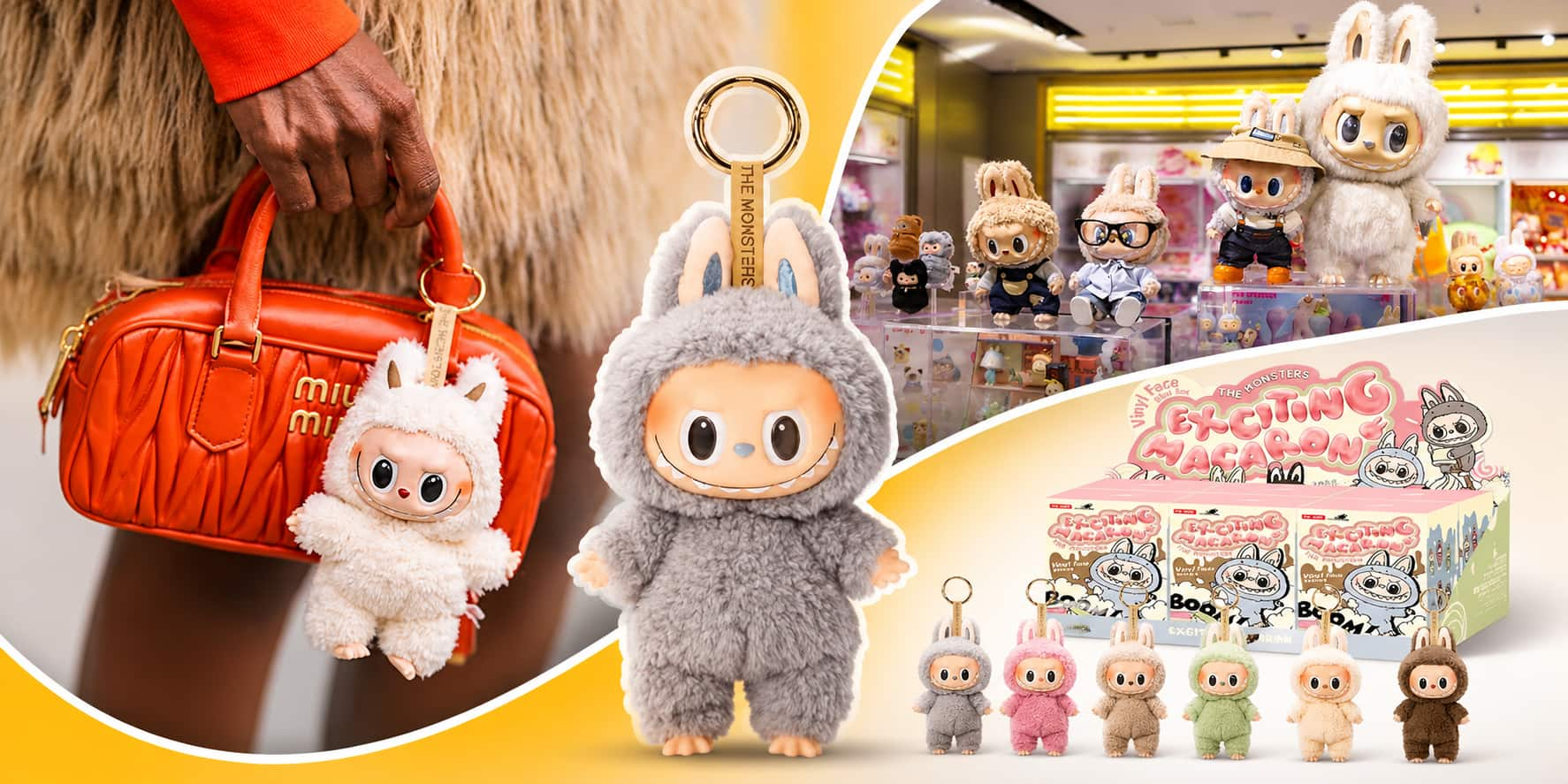
That is the story of Labubu, the collectible character that went from an artist's imagination to a worldwide obsession. From celebrities attaching Labubu dolls to luxury handbags to collectors lining up outside stores, it became a fashion accessory, social media sensation, collector's item, and symbol of belonging.
In 2025, POP MART, the company commercialising Labubu globally, recorded RMB 37.12 billion in revenue. Its The Monsters franchise, which includes Labubu, generated RMB 14.16 billion, growing 365.7% year over year. But what made people so eager to buy these dolls, and what can other businesses learn from it?
The Beginning: How Labubu Became a Recognisable Brand
Labubu was created in 2015 by Hong Kong-born artist Kasing Lung as part of The Monsters, a fantasy world inspired by Nordic mythology. The character combined pointed ears, a mischievous expression, fluffy textures in later versions, and a wide, toothy grin.
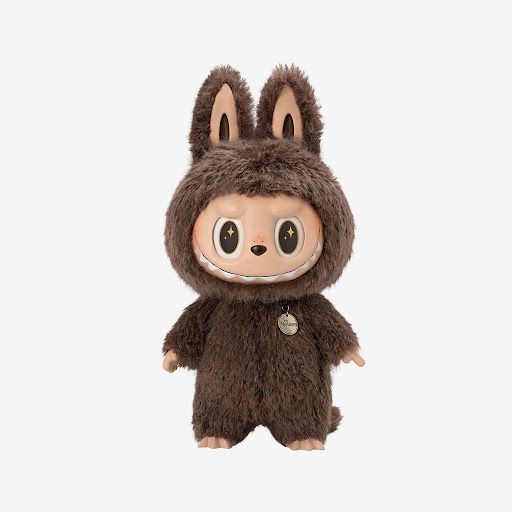
The first Labubu figurines were produced through Lung's collaboration with toy studio How2Work. POP MART later brought the characters into its larger collectible-toy ecosystem.
Why was the character design so effective?
Labubu challenged the traditional definition of cuteness. Instead of looking perfectly sweet, it appeared slightly strange, expressive, and playful. That visual identity became one of its most recognisable assets.
- Distinctive appearance: instantly identifiable among conventional plush toys.
- Emotional personality: mischievous but endearing.
- Design flexibility: adaptable to different colours, costumes, themes, and collections.
- Collectible potential: different editions encouraged personal preferences and collection-building.
- Visual consistency: new designs could remain recognisably Labubu.
The first lesson: a brand does not have to appeal to everyone. A distinctive identity can be more valuable than looking universally attractive.
The Numbers Behind Labubu's Global Success
+184.7% YoY
+365.7% YoY
+2,827 Roboshops
Revenue values are in Chinese yuan (RMB). The Monsters includes Labubu and other related products; POP MART does not report all these figures as Labubu-only doll revenue.
Graph 1: The Monsters revenue growth
Franchise revenue, 2024–2025, in billions of RMB. Source: POP MART annual results.The franchise's reported revenue grew more than fourfold between 2024 and 2025, showing how quickly a recognisable character can scale when consumer demand meets production capability, international distribution, and a wide product range.
Financial performance at a glance
| Business metric | 2024 | 2025 |
|---|---|---|
| POP MART total revenue | ¥13.04B | ¥37.12B |
| The Monsters revenue | ¥3.04B | ¥14.16B |
| The Monsters share of sales | 23.3% | 38.1% |
| The Monsters annual revenue growth | — | 365.7% |
Source: POP MART 2025 Annual Report. These are audited company-reported business figures.
The increase was extraordinary, but a successful product launch is not the same as a sustainable business. Labubu's expansion was backed by an established company with stores, digital platforms, international operations, and experience developing collectible character franchises.
Blind-Box Marketing: Selling the Thrill of Surprise
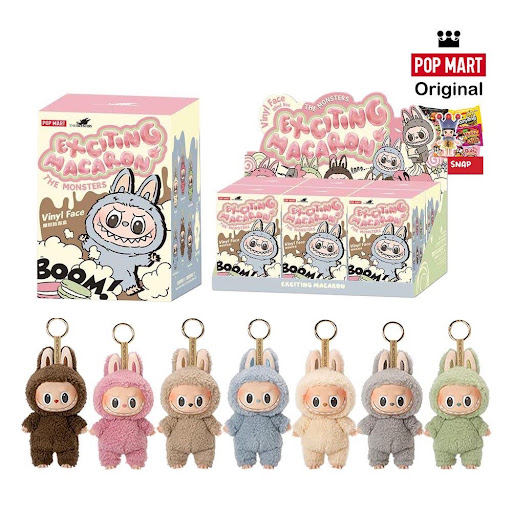
One of the strongest mechanisms behind Labubu's appeal was POP MART's blind-box model. Unlike a traditional toy purchase, a blind box conceals the specific collectible inside. The buyer knows the series but discovers the individual design only after opening the packaging, turning a simple transaction into a moment of anticipation.
Why the blind-box strategy encouraged purchases
- Curiosity: customers wanted to discover which character they would receive.
- Surprise: unboxing added emotional excitement to the buying experience.
- Collection completion: people had a reason to seek other designs in the series.
- Rare variants: secret editions created additional interest among collectors.
- Shareable moments: the reveal gave customers natural material for social media videos.
What consumer research tells us
A 2022 study in Frontiers in Psychology examined how uncertainty in blind-box products influences purchase intentions and found it works partly through the emotional value consumers associate with the product.
A separate 2025 study in the Journal of Retailing and Consumer Services analysed American adults' blind-box consumption. It identified a cycle of impulsive purchasing while raising concerns about the potentially exploitative aspects of uncertainty-driven marketing. These studies help explain why the format can be effective, though they do not establish how much of Labubu's revenue it caused.
The lesson for brands: a memorable purchasing experience can increase engagement, but surprise-based marketing should be transparent, fair, and designed to avoid encouraging compulsive spending.
Celebrity Marketing: When Labubu Became a Fashion Statement

The transformation of Labubu from collectible toy into global fashion accessory became especially visible in 2024 and 2025. Here are three celebrity moments that helped drive it.
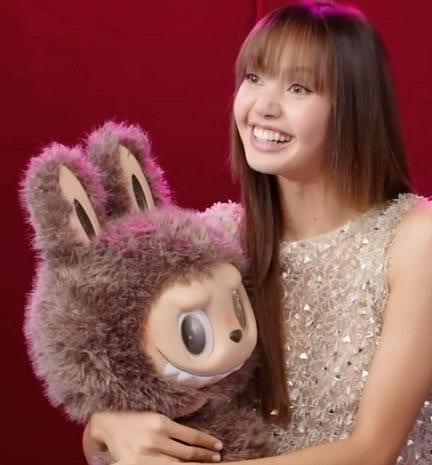
Lisa (BLACKPINK)
One of the earliest major celebrity figures to popularise Labubu internationally. Her social media appearances attracted fans and collectors.

Rihanna
Photographed carrying a handbag featuring a pink Labubu charm, establishing its appeal as a fashion accessory. Image: corriere.it.

Dua Lipa
Her styling showed how the collectibles moved beyond toys and into luxury fashion.
This was particularly effective because Labubu began appearing in contexts beyond toy collecting. A doll hanging from a designer handbag was no longer only a child's product; it became a playful form of fashion personalisation.
The celebrity influence effect
- A product gains exposure to audiences outside its original category.
- Consumers see the product used in a desirable social context.
- Fashion and lifestyle media discover a new story to cover.
- Fans imitate styling choices and create related content.
- The brand acquires cultural relevance without changing its underlying character.
Importantly, the available reporting does not establish that every celebrity appearance was a paid collaboration. The effect is best understood as celebrity visibility and cultural adoption, not a single coordinated influencer campaign. The most effective cultural influence can emerge when a product fits an existing lifestyle or community.
Social Media Hype: Customers Became the Marketing Team
On TikTok and Instagram, Labubu appeared in unboxing videos, collection tours, fashion content, humorous clips, and resale discussions. Rather than relying exclusively on branded advertising, the product inspired consumers to create their own content.
April 2025 · Vogue
1.2 million #Labubu TikTok posts
Late 2025 · Vogue Business tracker
3.3 million #Labubu TikTok posts
Reported hashtag counts at different observation dates, not a complete or independently audited time series.
Graph 2: Growth in reported TikTok conversation
Reported #Labubu posts on TikTok, millions, at two published observation points in 2025.The increase indicates sustained online conversation, although hashtag counts alone cannot prove sales conversion or causal impact.
How the content-to-sales cycle worked
Illustrative marketing flywheel, not a measured POP MART attribution model.
A single unboxing video can introduce the product to new viewers, while the comments can generate questions about availability, pricing, collections, and authenticity. The product gives consumers something to talk about before, during, and after their purchase.
Scarcity Marketing: Why People Wanted Labubu Even More
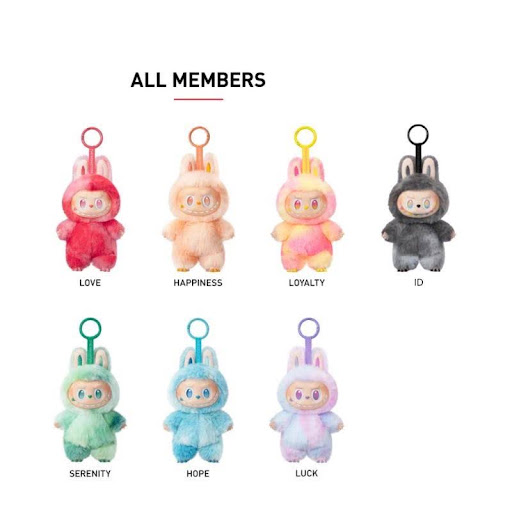
When a popular design sold out, customers often had to wait for restocks, search alternative locations, or explore resale marketplaces. The Big into Energy series became a prominent example: in April 2025, Vogue reported that the collection had sold out worldwide shortly after release.
The psychology of limited availability
An item that appears difficult to obtain may feel more desirable, particularly when tied to identity, collecting, or social status. A 2026 study in the Journal of Retailing and Consumer Services ran three experiments on scarcity in blind-box purchasing and found that scarcity increased impulse-purchase intentions, with supply-based scarcity stronger than demand-based scarcity in the tested settings.
This offers a possible explanation for the phenomenon, but it does not prove that POP MART intentionally restricted every release or that stockouts were always planned.
Case example: Labubu and the resale market
Vogue reported in April 2025 that Labubu had become the leading collectible release on StockX, with an average resale price of $208 against an original price of $168, a 24% premium.
Graph 3: Reported retail vs. resale price
US dollars, one StockX collectible-release example reported in April 2025.This comparison does not represent typical prices for every Labubu variant.
Scarcity can attract attention. Customer trust determines whether that attention becomes long-term loyalty. Brands can create excitement through authentic limited editions, exclusive collaborations, and transparent availability.
Want to turn attention into measurable demand?
Talk to Kings DigitalOmnichannel Sales: Turning Hype into Revenue
Viral attention does not automatically create a successful business; customers also need convenient ways to buy. POP MART combined physical stores, online shopping, social commerce, and automated retail kiosks known as Roboshops.
By the end of 2025, the company had 630 physical stores and 2,637 Roboshops. By June 2026, those numbers had expanded to 676 stores and 2,827 Roboshops.
| Sales channel | Role in the customer journey | Marketing advantage |
|---|---|---|
| Physical retail stores | Product discovery and shopping | Experiential brand engagement |
| Roboshops | Convenient purchases in high-traffic locations | Accessibility and visibility |
| Official website and app | Direct digital purchasing | Customer relationship and repeat sales |
| TikTok and social commerce | Connecting content with shopping | Shorter path from discovery to purchase |
| International ecommerce | Expanding market access | Geographic scale |
The Americas: a striking example
Americas revenue
From about RMB 802.2 million in 2024 to RMB 6.81 billion in 2025, growth of 748.4%.
TikTok channel
Revenue in the region reached about RMB 1.04 billion in 2025.
Marketing and distribution were mutually reinforcing. Social media increased discovery, stores and ecommerce converted interest into purchases, and customers added further visibility through their own content. Marketing strategy should never stop at impressions; it must also consider availability, conversion, fulfilment, customer experience, and retention.
Emotional Branding: Why People Became Attached
Labubu's popularity reflects the growing appeal of collectibles among adults, who may buy for nostalgia, entertainment, self-expression, personalisation, or the satisfaction of completing a collection. Vogue's 2025 reporting explored how plush toys and collectibles appealed to consumers seeking comfort, playful self-expression, and a connection with childhood.
| Product feature | Potential emotional benefit |
|---|---|
| Mischievous character design | Personality and emotional connection |
| Multiple collectible variants | Enjoyment of collecting |
| Blind-box packaging | Anticipation and surprise |
| Fashionable bag charms | Self-expression and identity |
| Online collector communities | Social connection and belonging |
| Limited or uncommon editions | Distinctiveness and collector pride |
A doll may cost relatively little to make compared with the value consumers attach to a character, collection, or experience. That emotional value must be continually supported by product quality, storytelling, and a trustworthy customer experience.
Is the Labubu Hype Sustainable? What 2026 Reveals
According to POP MART's first-half 2026 results, The Monsters generated RMB 4.45 billion, compared with about RMB 4.81 billion in the same period of 2025. Its share of POP MART revenue fell from 34.7% to roughly 26%, while total company revenue grew 23.8% to RMB 17.17 billion.
Graph 4: The Monsters revenue, H1 2025 vs H1 2026
RMB billions, comparable first-half periods; a decline of approximately 7.6%.This does not mean Labubu stopped being successful, but it shows how hard it is to sustain extreme growth after a cultural peak. POP MART's wider portfolio kept expanding, with properties such as Twinkle Twinkle, Crybaby, Dimoo, and Skullpanda contributing. The company reported that Twinkle Twinkle grew 580.6% year over year in H1 2026.
What can brands learn from this?
The long-term challenge is not creating a viral product but building a brand consumers still care about when attention moves elsewhere. Avoid basing your entire growth strategy on one trending product, and invest in:
- Product development and innovation
- Customer retention and loyalty
- Brand storytelling and intellectual property
- Diversified collections and complementary products
- Consistent quality and customer experience
- Long-term community engagement
The Labubu Marketing Playbook
Fashion, beauty, lifestyle, restaurant, and D2C brands can all adapt elements of this approach. The objective is not to copy Labubu's product or scarcity model, but to understand how it created recognition, emotional attachment, conversation, and conversion.
| Labubu strategy | What it achieved | How another brand can apply it |
|---|---|---|
| Distinctive character identity | Made the product memorable | Develop recognisable visual branding |
| Blind-box experience | Made purchasing entertaining | Improve packaging and unboxing |
| Celebrity visibility | Expanded its audience | Build authentic creator relationships |
| User-generated content | Encouraged peer-to-peer promotion | Create customer-led content campaigns |
| Product collections | Encouraged ongoing interest | Launch complementary product ranges |
| Scarcity and special editions | Increased urgency and attention | Offer meaningful, transparent limited releases |
| Community participation | Supported customer connection | Build customer clubs and interactive communities |
| Omnichannel retail | Helped turn demand into purchases | Connect social media, ecommerce, and physical sales |
A 90-day marketing framework inspired by Labubu
Make the brand recognisable. Define a clear positioning statement, sharpen the visual identity, identify relevant communities, and test memorable product stories.
KPIs: branded searches, reach, saves, message recall.
Create a reason to talk. Work with relevant creators, improve unboxing experiences, introduce interactive content, and invite customers to share how they use the product.
KPIs: user-generated posts, qualified engagement, referral traffic, product-page visits.
Convert attention into sustainable growth. Optimise purchasing channels, test product launches, improve customer support, encourage authentic reviews, and strengthen retention.
KPIs: conversion rate, CAC, repeat purchase rate, contribution margin, customer lifetime value.
This framework is a practical recommendation derived from the case study, not a documented POP MART campaign schedule.
Five Important Lessons Every Marketer Should Learn
Recognisable identity is a powerful asset
Labubu's unusual look made it easy to identify and discuss, helping it stand out when consumers have endless choices.
Consumers can become promoters
Unboxing videos, styling, and collector discussions generated visibility traditional advertising would struggle to replicate.
Cultural relevance expands a market
Celebrity visibility and the bag-charm trend reached consumers not necessarily interested in collectible toys.
Hype needs a sales system
POP MART had the operational capability to serve demand across digital and physical retail channels.
A viral peak is not enduring success
The 2026 results highlight the need to expand portfolios, build communities, and keep long-term customer relationships.
Labubu Sold More Than a Toy. It Sold an Experience.
Labubu's journey from an illustrated character to a global collectible sensation is one of the most interesting branding stories of recent years. Its success was not built on one campaign or a single celebrity appearance, but on distinctive design, emotional connection, cultural relevance, shareable experiences, collectibility, and accessible sales channels.
The Monsters franchise generated RMB 14.16 billion in 2025, yet the moderation in 2026 shows that consumer attention is constantly evolving. For brands hoping to recreate some of this success, the biggest opportunity lies in understanding what made the product meaningful to customers rather than blindly copying the hype.
A product becomes a brand when people recognise it. A brand becomes a phenomenon when people make it part of their identity, conversations, and culture. And the real achievement is making that connection last.
The Labubu Brand Growth Formula
| Key element | Strategy | Impact on growth |
|---|---|---|
| Brand identity | Build a distinctive and instantly recognisable brand personality. | Improves recall and differentiates from competitors. |
| Emotional value | Create products and experiences that connect with customers' emotions. | Builds attachment and encourages loyalty. |
| Cultural relevance | Connect the brand with celebrities, social trends, and popular culture. | Expands reach and visibility. |
| Shareable experiences | Encourage unboxing videos, user-generated content, and social engagement. | Generates organic publicity and word of mouth. |
| Sales accessibility | Offer convenient purchasing through stores, ecommerce, and social commerce. | Converts interest into sales and supports expansion. |
| Customer retention | Introduce fresh collections, meaningful innovations, and community experiences. | Encourages repeat purchases and sustains growth beyond trends. |
Sources, Reports & Research References
This case study draws on company financial disclosures, fashion and business reporting, and peer-reviewed consumer-behaviour research.
- POP MART, 2025 Annual Report (published 2026): financial performance, franchise revenue, international expansion, and retail distribution. Read the annual report
- POP MART, First Half 2026 Financial Results (August 20, 2026): company growth, The Monsters revenue, diversification, and retail network. Read the financial results
- Vogue, April 30, 2025: Labubus, Jellycats and Crybaby: Why Are Toys Going Viral in 2025? Read the article
- WIRED, 2025: A Journey Into the Heart of Labubu, on Kasing Lung, early figurines, and POP MART. Read the feature
- Frontiers in Psychology, 2022: uncertainty, perceived emotional value, and blind-box purchase intentions. Read the research
- Journal of Retailing and Consumer Services, 2025: Eye-opening! Exploring uncertainty marketing through hedonic blind box collectibles. Read the study
- Journal of Retailing and Consumer Services, 2026: The scarcer, the more eager to buy? scarcity and impulse-purchase intentions. Read the research
Editorial note: the graphs are original visualisations of reported figures, not reproduced from POP MART investor materials. Revenue, resale prices, and social media observations are different measures and should not be read as a single causal dataset. Images are illustrative editorial references; check licensing permissions before republishing commercially.
Frequently Asked Questions
1. Why did Labubu become so popular worldwide?
Labubu became a global sensation because of its unique character design, celebrity influence, and viral social media content. Celebrities like BLACKPINK's Lisa, Rihanna, and Dua Lipa helped bring attention to the collectible, while TikTok unboxing videos and Instagram trends increased its popularity. POP MART's blind-box strategy and limited-edition collections also made it highly desirable among collectors and fashion enthusiasts.
2. What marketing strategies made Labubu successful?
Success was driven by scarcity marketing, influencer visibility, emotional branding, and user-generated content. POP MART used blind-box packaging to create excitement and surprise, while limited-edition releases encouraged collecting. Social media trends, celebrity appearances, and strong retail distribution helped the brand reach international audiences and convert interest into sales.
3. How much money did Labubu generate in sales?
In 2025, POP MART's The Monsters franchise, which includes Labubu, generated approximately RMB 14.16 billion, representing 365.7% year-on-year growth and around 38.1% of POP MART's total annual revenue. These figures cover the entire Monsters franchise rather than Labubu dolls alone.
4. How did social media contribute to Labubu's marketing success?
TikTok and Instagram played a significant role. Consumers shared unboxing videos, displayed collections, and styled Labubu charms with handbags and outfits. This user-generated content created organic exposure, introduced the product to new audiences, and encouraged conversations around upcoming collections, effectively turning customers into brand advocates.
5. What can other brands learn from Labubu's marketing strategy?
Successful marketing involves more than promoting a product. Businesses can learn the importance of a recognisable brand identity, emotional connections, customer participation, and memorable purchasing experiences. Cultural relevance, accessible sales channels, and product innovation matter too, and brands should focus on long-term loyalty rather than depending on temporary viral trends.
Ready to build your own breakout brand story?
Get Started