
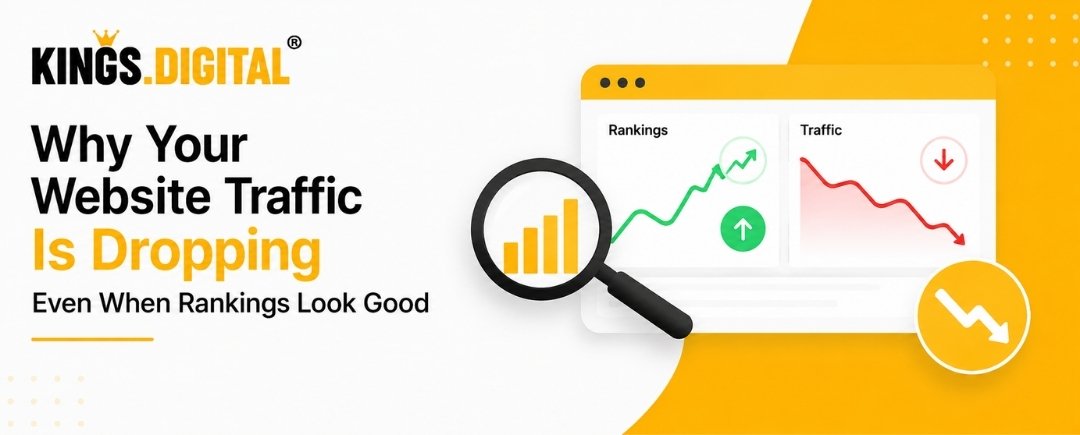


Your keywords are still on the first page of Google. Some may even appear in the top three positions. Yet your website traffic is falling, enquiries are slower, and Google Search Console shows fewer clicks.
This problem is becoming more common. A good Google ranking no longer guarantees the same amount of traffic. Search pages now include Google AI Overviews, featured snippets, maps, videos, shopping results, and "People also ask" sections. Users can often find an answer without opening a website.
Why Your Organic Traffic Is Falling Even When Rankings Stay High
More Searches Are Ending Without a Click
One major reason for an organic traffic decline is the growth of zero-click searches. A 2026 SparkToro analysis, based on Similarweb data, found that 68.01% of Google searches in the United States ended without a click. Only 276 out of every 1,000 searches sent a user to the open web.
Google AI Overviews can reduce clicks further. Pew Research Center found that people clicked a normal search result in 8% of visits when an AI summary appeared. When there was no AI summary, the click rate was 15%.
Your page may still rank well, but fewer people visit because Google has already shown them a quick answer.
Your Ranking Report May Hide the Real Story
Most SEO tools show an average keyword position. This number may look healthy while hiding important details.
For example, your website may rank for "digital marketing," but many searches may come from students looking for a definition. They are not business owners searching for a digital marketing agency.
The ranking looks impressive, but the keyword brings little business value.
Study performance by country, device, page, and search query. Separate branded keywords from non-branded keywords. More searches for your company name can improve your average position without bringing new customers.
This is why businesses should measure qualified website traffic, leads, calls, and sales rather than watching keyword rankings alone.
Search Intent May Have Changed
Search intent explains what a person wants when entering a keyword. That need can change over time.
Suppose your article ranks for "best SEO tools." Earlier, users may have wanted a detailed comparison. Today, they may prefer a free tool, a short video, or an instant AI answer.
Your position may remain almost the same, but fewer people click because your content no longer matches their expectations.
Search your main keywords and study the page carefully. Is Google showing detailed guides, videos, service pages, local listings, or short answers? Update your content to match the current search intent instead of simply adding more keywords.
Kings Digital helps businesses move beyond basic ranking reports with SEO and AI search strategies focused on meaningful visibility and qualified traffic.
Your Title Is Not Winning the Click
A page can rank well and still have a weak organic click-through rate.
Titles such as "SEO Services" or "Complete Marketing Guide" are too broad. They do not explain why someone should choose your page over the other results.
A better title may be:
"Local SEO Services That Help Gurgaon Businesses Get More Calls"
This title clearly explains the audience, service, and expected result. It gives users a reason to click.
However, avoid clickbait. A title should create interest, but the content must deliver what it promises.
AI Search Needs Clear and Helpful Content
AI search optimisation is not about writing robotic paragraphs or repeating the same keyword. Google says its normal SEO best practices also apply to AI Overviews and AI Mode. Pages should be indexed, helpful, easy to understand, and supported by reliable information.
Answer the main question early. Use clear headings, short explanations, trusted data, real examples, and original insights.
Google's AI features may perform several related searches before creating an answer. This is known as query fan-out. Covering connected questions can therefore support both SEO and answer engine optimisation.
For example, a page about local SEO can also explain Google Business Profile, reviews, local keywords, location pages, mobile experience, and online trust.
Your Traffic Tracking May Be Incomplete
Before changing your entire SEO strategy, check your tracking.
A broken analytics tag, website migration, consent banner, URL change, or incorrect filter can make traffic appear lower than it really is.
Compare Google Search Console clicks with your analytics sessions. A sudden difference between the two may point to a tracking problem rather than a real SEO traffic drop.
From tracking audits to AI-ready content, Kings Digital builds SEO strategies focused on measurable growth, not just positions.
Look Beyond Keyword Rankings
Rankings still matter, but they are only one part of SEO performance. Track impressions, clicks, conversions, leads, AI citations, brand searches, and customer actions.
Google says its total organic click volume has remained relatively stable overall, but traffic is shifting between websites. Original reviews, first-hand opinions, videos, useful guides, and real experience are attracting more attention.
When website traffic is falling even though rankings look good, do not chase positions blindly. Improve your titles, study search intent, strengthen your content, and give visitors something they cannot get from a short AI answer.
Kings Digital helps businesses move beyond basic ranking reports with SEO and AI search strategies focused on meaningful visibility, qualified traffic, and measurable growth.
Common Questions
Frequently Asked Questions
Website traffic may fall because of AI Overviews, featured snippets, changing search intent, stronger competitors, weak titles, or users finding answers without clicking any search result.
Yes, AI Overviews may reduce organic clicks by answering questions directly on Google. However, clear, original, and trusted content can still gain visibility and valuable visits.
Write clear page titles and meta descriptions that match search intent. Show a useful benefit, use the main keyword naturally, and avoid vague or misleading clickbait headlines.
Yes. Your website can maintain the same position while fewer people search for that keyword. Seasonal demand, market changes, and new search habits can reduce overall search volume.
Review search intent, refresh old content, improve page titles, fix technical issues, target valuable keywords, add original information, and optimise your pages for Google and AI search engines.